
By Taylor Walder · Female Reserve Journal · 27 October 2026 Reviewed: 27 Oct 2026, Victoria Grant (AI evidence review)
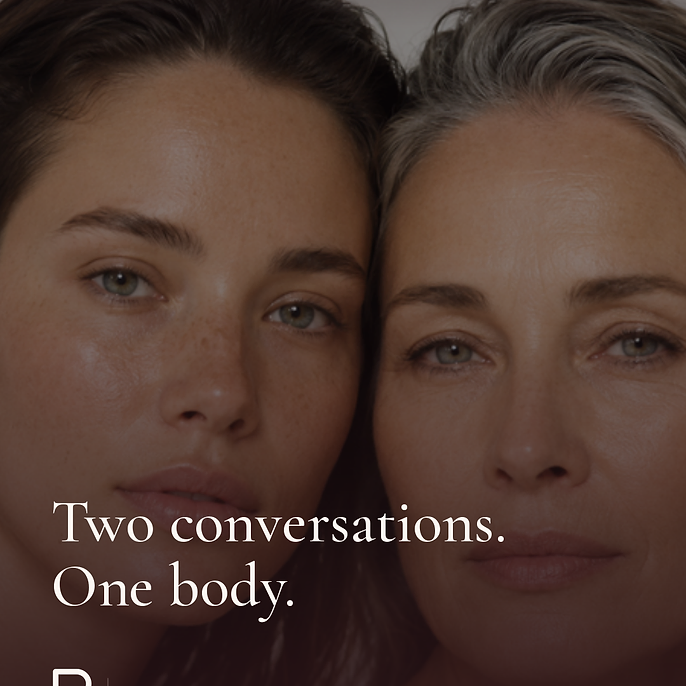
October holds two conversations about women's bodies. According to the International Agency for Research on Cancer (IARC), it is Breast Cancer Awareness Month. On 18 October comes World Menopause Day, marked every 18 October by the International Menopause Society (IMS). They are usually told apart. For a woman in her forties or fifties, they belong to the same life, and sometimes the same appointment.
This isn't a to-do list. It is what the official sources say, so your next appointment starts from their words, not a campaign's.
What the global numbers describe
According to IARC's most recent estimates, almost 2.5 million people developed breast cancer and almost 700,000 died from it in 2024. IARC describes breast cancer as by far the most common cancer type among women and the leading cause of cancer death among women (IARC, 2026).
The WHO breast cancer fact sheet adds two lines of perspective. According to the WHO, approximately 80% of breast cancers develop in women who have no modifiable breast cancer risk factor other than being female and over 40. This is a population figure, not a statement about any one woman's risk. The WHO also states that most women diagnosed have no known family history, and that the absence of a known family history does not necessarily mean a woman is at low risk (WHO, 2026).
What kind of evidence this is: population estimates. They describe the world, not you.
What raises risk, according to the agencies
The WHO lists factors that increase breast cancer risk: increasing age, obesity, harmful use of alcohol, family history of breast cancer, a history of radiation exposure, reproductive history, tobacco use and postmenopausal hormone therapy (WHO, 2026). IARC names obesity and alcohol consumption as known causes and estimates that these two factors alone caused more than 250,000 cases of breast cancer in 2022 (IARC, 2026).
Some of the factors on the WHO list are fixed, such as age and family history. Hormone therapy is on the list too, and the NCI's summary, below, shows why it is a decision with trade-offs.
Where breast health and menopause meet
According to the US National Cancer Institute (NCI), menopausal hormone therapy (MHT) is sometimes used to relieve menopause symptoms such as hot flashes and vaginal dryness, and its potential benefits and harms differ by type.
The NCI lists, among the potential benefits of systemic estrogen alone, a lower risk of breast cancer and of death from breast cancer. Among the potential harms, it lists an increased risk of breast cancer with prior use of estrogen plus progestin, lasting at least a decade after use stops, and increased breast density with estrogen plus progestin, which makes mammography less effective. The NCI notes that estrogen alone is used only in women who have had a hysterectomy. It also states that women who have had breast cancer are often advised to avoid MHT, while noting that not all studies have shown an increased risk of recurrence (NCI, MHT fact sheet, reviewed 25 Sept 2023).
UK guidance (NICE NG23, 2024) says combined HRT is linked to a higher risk of breast cancer. The risk rises the longer it is used, is higher in current than past users, and falls after stopping but can last at least 10 years. Oestrogen-only HRT is linked to very little or no increase in breast cancer risk. A 2019 analysis of worldwide studies (Collaborative Group, Lancet) found that every type except vaginal oestrogen was associated with higher risk, rising with duration and greater for oestrogen-progestagen than oestrogen-only. Talk to your clinician about your options, including HRT.
What kind of evidence this is: the NCI draws mostly on the Women's Health Initiative randomised trials and their follow-up studies. The NCI advises discussing the likely benefits and harms with a provider before deciding. We are not making a recommendation either way.
What menopause itself involves
According to the WHO menopause fact sheet, natural menopause generally occurs between 45 and 55 and is deemed to have occurred after 12 consecutive months without menstruation with no other obvious cause. The WHO lists symptoms associated with menopause, including hot flushes and night sweats, vaginal dryness and pain during sex, difficulty sleeping, and changes in mood. The WHO adds that body composition and cardiovascular risk can also be affected (WHO, 2024). Symptoms vary widely; some women have few, others have severe ones. Not every change is caused by hormones.
For World Menopause Day 2026, the IMS chose the theme "Chronic Pain at Midlife". The IMS states that chronic pain affects a significant proportion of women during and after the menopause transition, yet remains underestimated in both research and care (IMS, 2026). We have not yet reviewed the evidence in the IMS White Paper, so we report the theme and leave its claims for a later issue.
Menopause or getting older? The WHO describes these as symptoms associated with menopause, which is not the same as saying each is caused by it. That is why the Journal keeps menopause effects and ageing apart.
What one screening guideline says
Screening guidance differs by country, and each health system sets its own programme. As one example, and as US guidance for women at average risk only, the US Preventive Services Task Force (USPSTF) recommends biennial screening mammography for women aged 40 to 74 (grade B). Screening advice differs by country and by personal risk. For women 75 and older, the USPSTF concludes that the evidence is insufficient to assess the balance of benefits and harms (USPSTF, 2024; Nicholson et al., JAMA 2024). The USPSTF states that these recommendations apply to people at average risk and do not apply to those with a high-risk genetic marker such as BRCA1 or BRCA2, prior chest radiation at a young age, or previous breast cancer.
We quote this guideline to show what a guideline looks like, not to set a schedule for you. Where you live, your history and your clinician's advice decide what applies.
Your baseline, your own body
Female Reserve compares you with your own baseline, not with population averages. For breast health, the baseline is not a number in an app. It is knowing what your own breasts usually look and feel like, and knowing your family history well enough to share it. The WHO lists a breast lump or thickening, and changes in the size, shape or skin of the breast, among possible symptoms (WHO, 2026). Show any new change to a clinician, whenever your last screen was.
Female Reserve provides general health information. It does not diagnose, treat or replace care from a qualified professional. If you are worried about a symptom, speak to a clinician.
For menopause, the baseline is your usual cycle, sleep and strength before the transition, which we cover in Perimenopause Starts Before You Notice.
When to talk to a clinician
Talk to a clinician about any new breast change, your family history, which screening programme applies to you, and before starting or stopping hormone therapy. This article is general information, not a diagnosis or an individual plan.
The takeaway
October's two campaigns describe one stage of life. According to the WHO, age and sex are the main breast cancer risk factors; according to IARC, obesity and alcohol are known causes; according to the NCI, the effects of hormone therapy differ by type. The WHO lists the changes associated with menopause, and the IMS asks this year that chronic pain at midlife be taken seriously. Knowing your own baseline is the part you hold.
Understand the system. Protect your Reserve.
Taylor Walder, Journal Editor, Female Reserve Journal
Related on Female Reserve: Perimenopause Starts Before You Notice (3 Nov) · Menopause and Your Heart (10 Nov)
Sources (re-opened 27 Oct 2026; 8–9 added per V043 AI evidence review)
- International Agency for Research on Cancer. IARC marks Breast Cancer Awareness Month 2026. 1 Oct 2026. https://www.iarc.who.int/news-events/iarc-marks-breast-cancer-awareness-month-2026/
- World Health Organization. Breast cancer (fact sheet, 3 July 2026). https://www.who.int/news-room/fact-sheets/detail/breast-cancer
- National Cancer Institute. Menopausal Hormone Therapy and Cancer (fact sheet, reviewed 25 Sept 2023). https://www.cancer.gov/about-cancer/causes-prevention/risk/hormones/mht-fact-sheet
- World Health Organization. Menopause (fact sheet, 16 Oct 2024). https://www.who.int/news-room/fact-sheets/detail/menopause
- International Menopause Society. World Menopause Day 2026: Chronic Pain at Midlife. https://www.imsociety.org/education/world-menopause-day-2026/
- US Preventive Services Task Force. Breast Cancer: Screening (final recommendation, 30 Apr 2024). https://www.uspreventiveservicestaskforce.org/uspstf/recommendation/breast-cancer-screening
- US Preventive Services Task Force; Nicholson WK, et al. Screening for Breast Cancer: US Preventive Services Task Force Recommendation Statement. JAMA. 2024;331(22):1918–1930. https://pubmed.ncbi.nlm.nih.gov/38687503/
- National Institute for Health and Care Excellence. Menopause: identification and management (NG23, updated 2024). https://www.nice.org.uk/guidance/ng23
- Collaborative Group on Hormonal Factors in Breast Cancer. Type and timing of menopausal hormone therapy and breast cancer risk: individual participant meta-analysis of the worldwide epidemiological evidence. Lancet 2019;394(10204):1159–1168. doi:10.1016/S0140-6736(19)31709-X · https://europepmc.org/article/MED/31474332
Evidence tag: Guideline — Based on clinical guidelines / pooled studies.
Join the list
Understand the system. Protect your Reserve.
Occasional emails about what we are building.
Join the list →Female Reserve provides education, not medical diagnosis or treatment.